Product Design Technology
Application/Solution Design Technology
(Housing Design Technology)
Application/Solution Design Technology (Housing Design Technology) icon

Application/Solution Design Technology (Housing Design Technology) icon

Summary

  • Generally, housing design technology involves designing a product's appearance, internal structure, and moving mechanisms to comprehensively achieve usability, safety, reliability, functionality, and design aesthetics.
  • Murata's housing design technology aims to simultaneously fulfill these requirements at a high level, pursuing “overall optimization” that encompasses performance, visual appeal, and production efficiency. We utilize 3D data, simulations, and analysis from the earliest stages of development. By verifying durability, waterproofing, and assembly feasibility during the design phase, we reduce reliance on prototypes and minimize rework in later stages. Furthermore, a rigorous multi-department review system identifies and resolves potential issues early, establishing a framework that reproduces stable quality and performance in mass production. Through this approach, Murata achieves efficient development and highly reliable housing design.

Murata's Application/Solution Design Technology (Housing Design Technology)

Technical Explanation

Murata's housing design is not merely about creating shapes. We pursue the “feasible optimal solution” that simultaneously fulfills “function,” “design,” and “productivity” right from the design stage. From the earliest development stages, we leverage key technologies—3D data, simulation, reverse engineering, optimization, and waterproof design—to reduce reliance on traditional prototyping and enhance design quality. By verifying alignment between calculations and actual measurements through data, we minimize rework and consistently reproduce identical performance in mass production. This embodies Murata's manufacturing prowess.

3D Data Technology: Utilizing 3D CAD data enables design, development, and production engineering departments to smoothly adjust complex structures and fine dimensions from initial design through mass production. This achieves reduced prototyping and shorter processes.

Simulation Technology: Before physical prototyping, various simulations verify performance and manufacturing challenges. Incorporating improvements at the design stage ensures both mass-producibility and reliability.

Reverse Engineering Technology: Existing products and prototypes are digitally captured with high precision via 3D scanning. The resulting structural and dimensional information is leveraged for design and improvement. This streamlines part redesign and manufacturing enhancements, enabling accurate sharing of shape data and swift, reliable implementation of design changes.

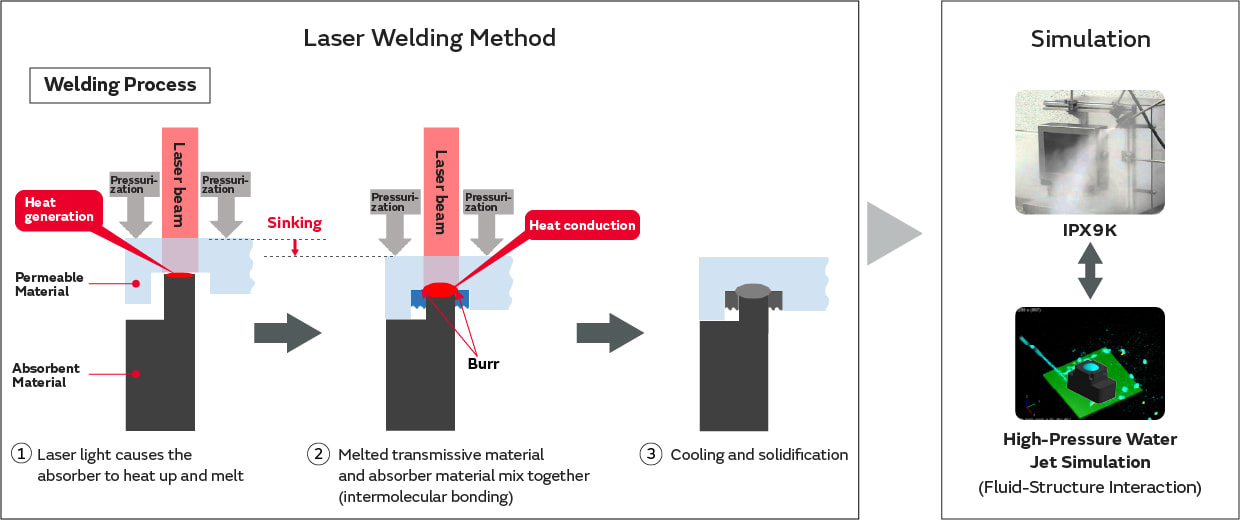
Waterproof Design Technology: We apply design expertise—such as sealant placement, component sealing structures, and balancing ventilation with waterproofing—to ensure stable operation of electronics and precision parts even in harsh environments. We achieve optimized waterproof structures through simulation and experimentation.

Optimization Technology: We comprehensively optimize not only performance but also cost, weight, size, and productivity. Using CAE (Computer-Aided Engineering) and algorithms for analysis and adjustment, we derive the optimal achievable design.

The Future of Our Targeted Development Process

Source of inserted image: What kind of future is a future in which AI and virtualization plays major roles in development processes?Open in New Window

Technological Strengths

Murata's strength in housing design lies in its ability to achieve an optimal balance of performance, quality, and cost, and to consistently reproduce this standard from development prototyping through mass production.

To simultaneously deliver high functionality, high quality, and low cost in compact form factors, we constantly integrate functionality (such as performance and durability), design (such as appearance and operability), and manufacturability (such as production efficiency and ease of assembly) at the highest levels. We derive optimal solutions tailored to specific applications and market needs.

Mechanism for Minimizing Design Rework
Supporting this design strength is the systematization of the entire design process and a rigorous review system.
Review gates (internal design reviews) are established at each stage, from specification review to mass production handover. Multiple departments, including design, production engineering, and quality assurance, gather to identify compliance with customer specifications and potential risks, enabling immediate action.
This system reliably reduces design rework, ensuring stable mass production quality, preventing manufacturing issues, shortening delivery times, and lowering costs.

Front-Loading Design
Front-loading design achieves minimal rework directly at the design stage.
From the initial design phase, we incorporate manufacturing conditions and assembly considerations to embed structures with mass-production readiness.
Furthermore, it reduces reliance on prototypes by completing preliminary structural verification using 3D models and various simulation technologies. For example, we perform multifaceted analyses—such as topology optimization for weight reduction and rigidity assurance, strength analysis for durability verification, thermal analysis for heat dissipation, and resin flow analysis to predict resin fillability—to optimize product structures.

This integrated system and the pre-verification achieved through front-loading design minimize post-mold-completion modifications and design changes.
Consequently, we achieve shorter development cycles and cost reductions while supplying highly refined design products that respond promptly to market needs.

Design Process

Technological Advancement

Murata's housing design has evolved by thoroughly implementing front-loading based on design expertise cultivated over many years. While issues sometimes surfaced just before mass production in the past, we now incorporate the latest tools and analysis techniques into the initial design phase, significantly enhancing the level of completion during the design stage.

Accumulation of Design Expertise
After each product development cycle, we conduct mandatory reviews. Defect cases are registered in a “Recurrence Prevention List,” while successful examples and improvements are reflected in the “Design Guideline.” This continuous accumulation of knowledge enhances designers' skills and design accuracy.
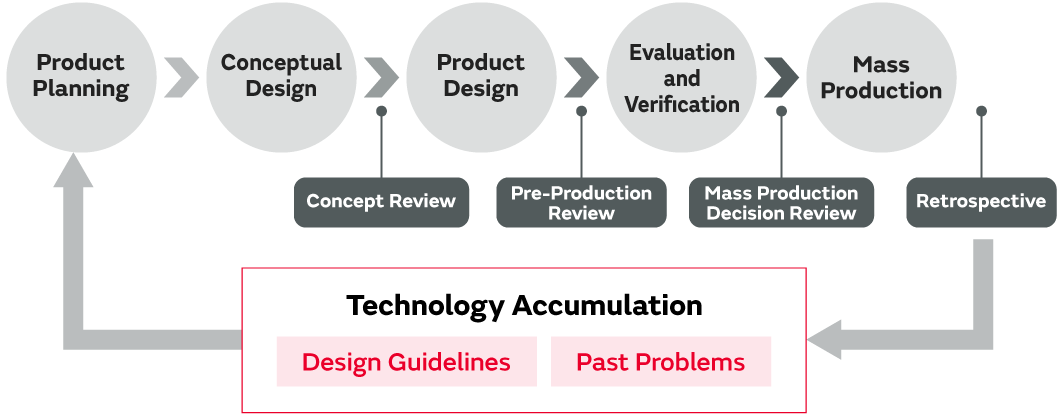
Accumulation of Design Technology

Establishing Specific Technologies Supporting Front-Loading

(1) Simulation Technology

Previously, problems were often discovered during molding trials. By performing resin flow analysis starting in the design phase, we can optimize housing shapes and gate positions, enabling us to predict and address potential issues in advance. Furthermore, incorporating fiber orientation data into strength analysis allows us to predict post-molding mechanical properties with high precision. This reduces the number of molding trials, saving both time and cost.
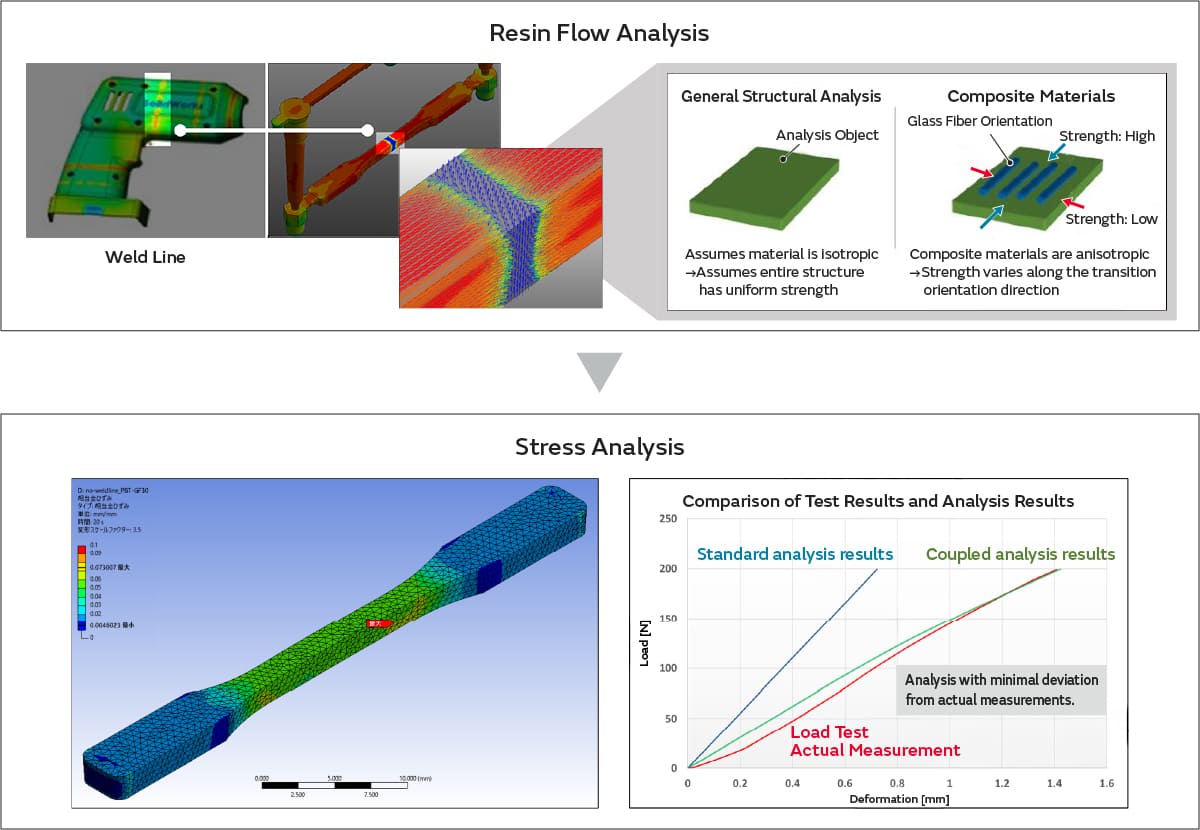
Resin Flow Analysis + Stress Analysis
By deriving the fiber orientation of fiber-reinforced composites through resin flow analysis and incorporating these results into stress analysis, highly accurate stress analysis results with minimal deviation from measured values can be obtained.

(2) Reverse Engineering Technology

Compared to traditional manual dimensional measurement, using high-precision 3D scanners enables rapid acquisition of shape data and its conversion into CAD models. Free-form surfaces can now be faithfully reproduced. This allows interference checks and analysis with existing parts from the early design stages, significantly shortening the design cycle.
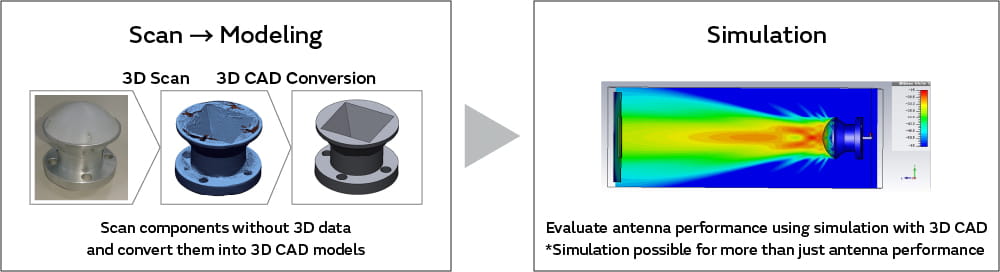
Reverse Engineering
Example: mmWave lens antenna (φ50mm)

(3) Waterproof Design Technology

Compared to conventional water-resistant structures, we quantitatively optimize waterproof designs using proprietary simulation technology that analyzes seal contact pressure, deformation, and water ingress pathways. This enables designs that operate stably without leaks, even during high-pressure washing tests for automotive products or in heavy rainfall environments.
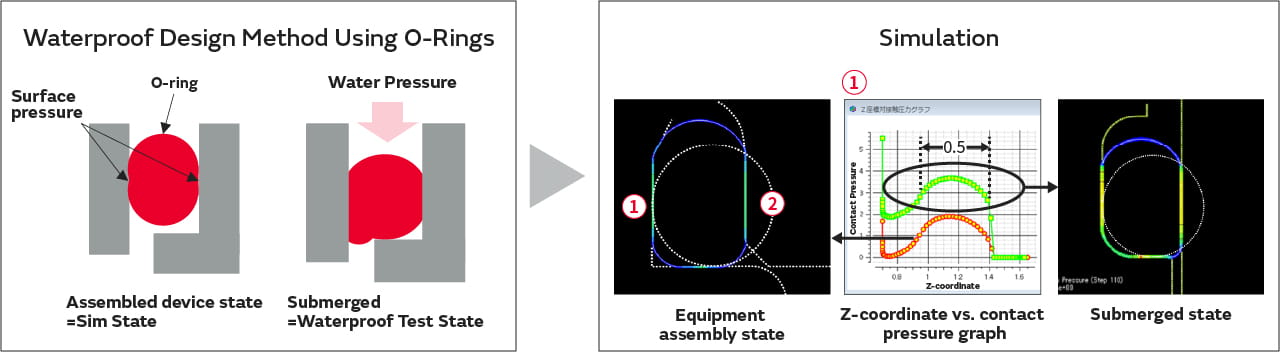
  • Waterproofing Technology: Waterproofing Methods for IPX4 to IPX7 Compliance
  • Waterproofing Technology: IPX9K-Compliant Waterproofing Method

(4) Optimization Technology

Previously reliant on designer experience and trial-and-error, we now automatically generate structural proposals meeting complex requirements—such as size, weight, strength, and heat dissipation—by leveraging topology optimization and multi-objective optimization technology. This enables the rapid design of high-performance enclosures meeting advanced specifications.

Topology Optimization: Select design concepts, manufacturing methods, and material candidates. Evaluate the balance of strength, cost, and mass from multiple generated results to select the optimal shape.

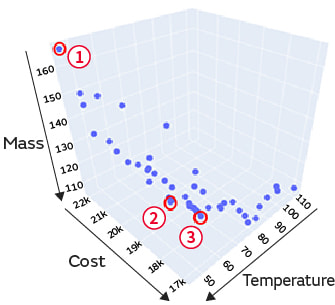
Multi-objective optimization: Utilize multi-objective optimization for heat transfer analysis to evaluate the balance of temperature, cost, and mass from multiple output results and select the optimal shape.
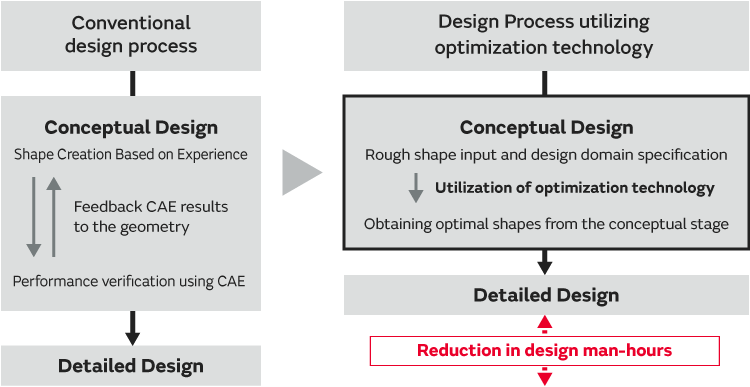
Comparison of design man-hours before and after optimization technology application
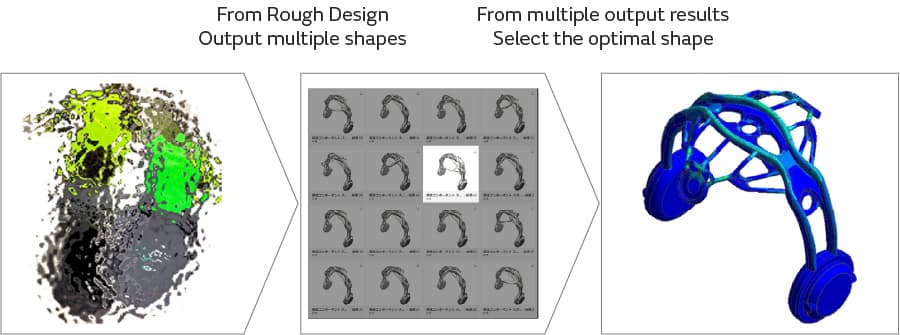
Topology Optimization
Image of Prioritizing Enclosure Temperature
Image of Prioritizing Assembly Mass
Image of Prioritizing Heat sink cost

①Prioritizing Enclosure Temperature

Large heat sink size

②Prioritizing Assembly Mass

Small heat sink size, therefore cooling via the following methods

  • Increased vent size
  • Increase air passage space

③Prioritizing Heat sink cost

Temperature and weight fall between options ① and ②

①Prioritizing Enclosure temperature ②Prioritizing Assembly Mass ③Prioritizing Heat sink cost
Heatsink Size [mm] 36.7×68.7×14.4 16.4×69.6×13.8 19.6×48.5×11.3
Enclosure Temperature 45℃ 60℃ 50℃
Heatsink Cost ¥22,000 ¥19,000 ¥18,000
Mass 165g 115g 120g
Optimization Results (3D Plot)

Optimization Results Using Multi-objective Optimization Technology

Application examples for this technology

Examples of Application/Solution Design Technology Application ~Product Introduction~

Technology