The Strength of “One Murata” in Overcoming the 2024 Noto Peninsula Earthquake: Turning Our Philosophy into Action and Building Stronger Bonds

When the 2024 Noto Peninsula Earthquake struck, many Murata Group companies were severely impacted. Amidst a situation where even daily life became difficult, employees asked themselves: “What can we do right now?” The answer was clear – come together, find solutions, and keep moving forward. Teams across Murata united to set up temporary production at other sites and work toward restarting operations. This is the story of how the collective strength of “One Murata” helped us overcome the disaster, told through the experiences of Wakura Murata Manufacturing Co., Ltd. (hereafter referred to as Wakura Murata), Anamizu Murata Manufacturing Co., Ltd. (hereafter referred to as Anamizu Murata), and Murata Manufacturing Co., Ltd. Yokaichi Plant (hereafter referred to as Yokaichi Plant).

Wakura Murata / Shenzhen Murata (China) Alternative Production Project

Wakura Murata located in Ishizaki Town, Nanao City, Ishikawa Prefecture, manufactures multilayer resin substrates (Multilayer LCP Products). After the earthquake caused severe damage to the town and factory, employees couldn’t safely return to work. Just four days after the disaster, we decided to conduct alternative production to Murata Electronics Trading (Shenzhen) Co., Ltd. in China – a move made possible by years of close collaboration between the two sites.

By having Wakura Murata rise to the occasion, we want to bring hope to the community.

What was the situation like at that time?
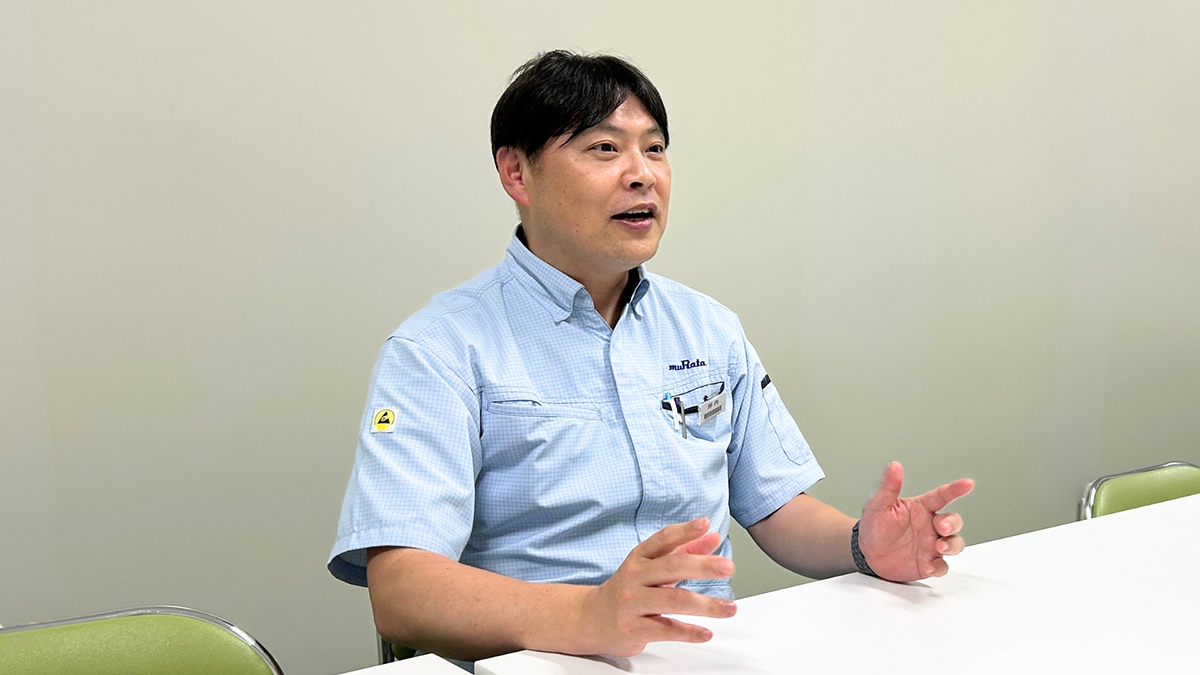
At the time of the earthquake disaster, Tsubouchi, the factory manager at Wakura Murata.
Tsubouchi:
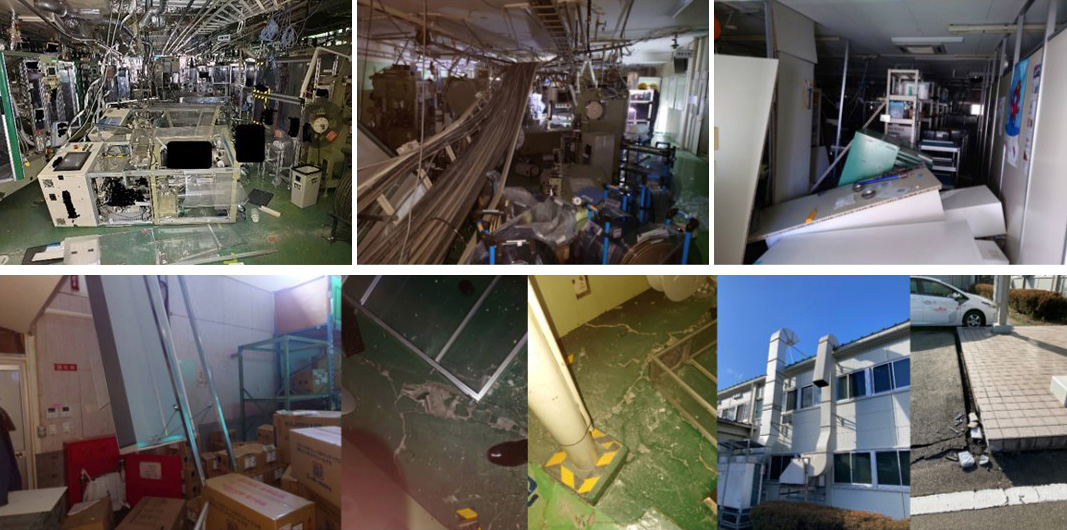
On my way to Wakura Murata, the roads were cracked and damaged everywhere. When I arrived, the factory had severe liquefaction – some areas had steps nearly 10 cm high. Inside, ceilings and walls collapsed, and floors sunk. Thankfully, none of the equipment had toppled, but the site was far from safe, and we had no idea when recovery might be possible. After inspecting the damage and consulting with customers, we decided – just four days after the earthquake – to conduct alternative production to Shenzhen Murata.

What were the challenges in setting up alternative production to Shenzhen Murata?

Tsubouchi:
Typically, alternative production requires customer approval. But in this case, the customer understood the situation and said, ‘If the evaluation results match past data from Wakura Murata, we’ll approve it.’ They even expressed concern about our disaster situation and supported us in areas where the transition would take time. We’re profoundly grateful for their understanding and support.

Why was it possible to transition so quickly after the earthquake?

Tsubouchi:
Shenzhen Murata already produced multilayer LCP products, so the same equipment we use at Wakura Murata was already in place there. That meant we had no major concerns about processing accuracy. Still, we couldn’t just leave everything to Shenzhen Murata. Five employees volunteered – despite the tough circumstances – to travel to China and provide on-site support.

Did you already have a cooperative relationship with Shenzhen Murata before the earthquake?

Tsubouchi:
Before the earthquake, Wakura Murata and Shenzhen Murata already had a strong, day-to-day collaborative relationship. For example, Wakura Murata sent staff to Shenzhen to help reduce defect rates and streamline equipment, while also adopting improvement ideas from Shenzhen Murata. They even welcomed long-term assignments from Shenzhen to develop engineering talent. During the COVID-19 pandemic, Wakura Murata stepped in to handle production for Shenzhen Murata during emergencies.
Both sides believed in leveraging each other’s strengths and worked as one team. That trust made it possible to switch to alternative production smoothly this time – so much so that shipments resumed within about two weeks of the decision.

What kind of collaboration or exchanges did you have with Shenzhen Murata?

Tsubouchi:
The team at Shenzhen Murata expressed their heartfelt gratitude for the support we’ve shared over the years. During this earthquake, they went above and beyond – not only handling alternative production but also acting as a key contact for customer supply issues. That allowed me to focus fully on recovery efforts at Wakura Murata. I’m truly thankful to have partners who step up when it matters most.
Support didn’t stop there. Himi Murata provided essential industrial water for about two months and even delivered bento meals to employees until our cafeteria reopened. Kanazawa Murata served as a hub for relief supplies, gathering and transporting goods to affected sites.
Through all of this, I felt the true power of “One Murata” – a spirit of solidarity that united every member of the Murata Group.

What lessons did you take away from this experience, and how did they make you stronger?

Tsubouchi:
During the recovery, I saw employees step up and take initiative, working independently to improve the situation day by day. Watching that unfold moved me to tears. The earthquake caused serious damage, but it also strengthened the bonds between us. I’m confident we’ll come back even stronger than before.

You’re also involved in regional rebuilding and revitalization efforts – can you share your thoughts on that?

Tsubouchi:
Nanao City is known for its fishing industry and famous hot springs, but the earthquake changed the coastal landscape dramatically. Fishing became difficult, and housing and livelihoods were heavily impacted. In those tough circumstances, Wakura Murata—deeply rooted in the local community, wondered if restarting operations so soon was the right move.
Still, believing even a small step could bring hope, they prioritized reopening. By early March, just two months after the disaster, they were back in operation.
Getting back on their feet strengthened employees’ pride and commitment. As the first step toward regional recovery, Wakura Murata reached out to Nanao City to collaborate on rebuilding the community.

What kinds of initiatives or projects did you carry out to help revitalize the region?

Tsubouchi:
We started by sponsoring local projects and events in Nanao City to help with revitalization. Then we teamed up with Anamizu Murata, which was also heavily affected, and reached out to Noto Railway – the line that connects both towns. Together, we set a goal: complete a special project one year after the railway’s full restoration.With volunteers from both sites, we designed and installed tunnel illumination, adding messages of encouragement for residents passing through. It was our way of bringing a little light and hope back to the community.

At Wakura Murata, contributing to the local community has always been part of who we are. As our founder Akira Murata said, we strive to be “a company whose presence in local communities is a source of pride and joy.”

Alternative Production Project at Anamizu Murata / Yokaichi Plant

Anamizu Murata, based in Anamizu Town in Ishikawa Prefecture, manufactures EMI suppression filters and inductors. The earthquake caused severe damage to its buildings, equipment, and surrounding infrastructure. Many of its products are used in automotive applications, including critical single-source components supplied only by Murata. To avoid disrupting customer supply, production needed to resume within two months.With local infrastructure recovery unlikely, the decision was made to relocate all equipment and fixtures from Anamizu Murata to the Yokaichi Plant in Shiga Prefecture. There, restoration and production systems were set up simultaneously. It was a massive challenge, but the entire Murata team came together to make it happen.

<Transitioning to alternative production>

Transitioning to alternative production

Despite the challenging conditions, everyone came together with determination and a strong sense of unity.

【Equipment removal from Anamizu Murata ~ Equipment delivery and repair at Yokaichi Plant】
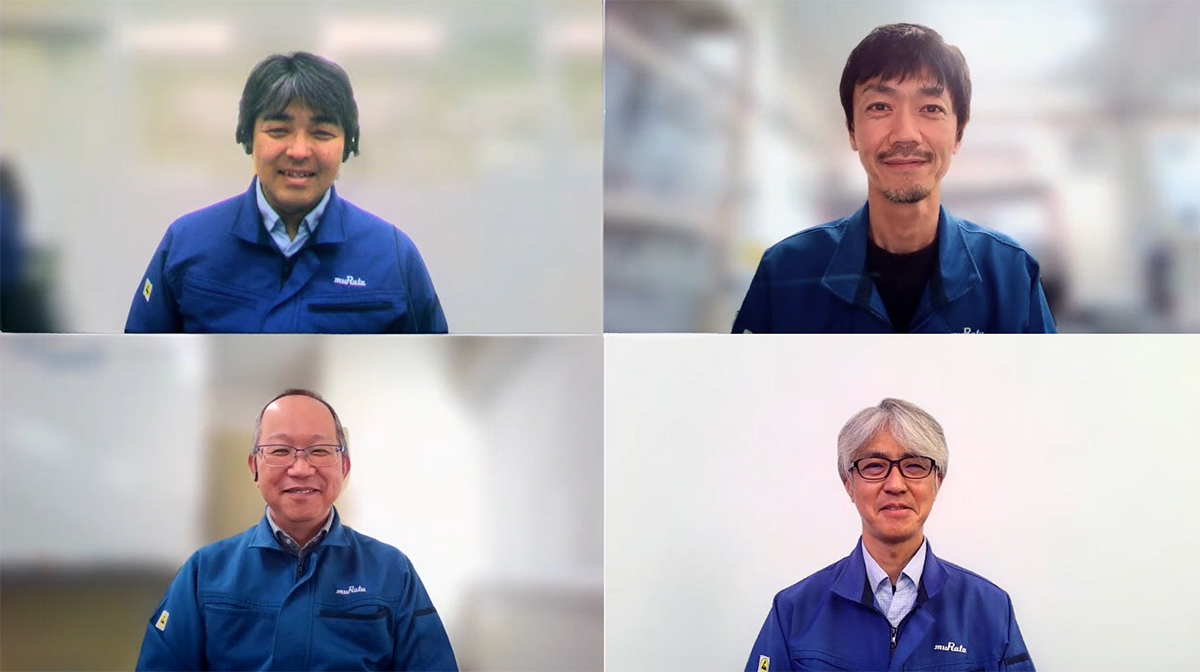
Top row from left: Tokoi (site manager for equipment removal), Ota (responsible for adjustments and quality evaluation for equipment operation). Bottom row from left: Miyake (project supervisor), Okazaki (in charge of repairs and infrastructure maintenance after equipment installation).
Top row from left: Tokoi (site manager for equipment removal), Ota (responsible for adjustments and quality evaluation for equipment operation).
Bottom row from left: Miyake (project supervisor), Okazaki (in charge of repairs and infrastructure maintenance after equipment installation).
Tokoi:
After the earthquake, the factory looked like nothing I’d ever seen – I was speechless. Thankfully, because it was a holiday, no one was inside when it happened. With just a handful of employees who managed to come in and about 20 colleagues from other sites, we started lifting fallen equipment and cleaning up. It was brutally demanding work in freezing temperatures, with no electricity or air conditioning.
Many employees had their homes damaged, yet everyone came together with one shared conviction: “We have to do this ourselves – we just have to make it happen.” That sense of solidarity and determination became a powerful force that helped us push through those tough times.
Ota:
The atmosphere had completely changed – uncertainty about the future was everywhere. People kept asking: “Will we ever be able to restart operations?” The tension dragged on, and it took a mental toll on everyone. Many were just trying to get through each day, yet despite those hardships, they gave their all, doing whatever they could at that moment.
The disaster situation in Anamizu Murata at that time
Miyake:
Management told me, “Don’t worry about the costs to revive Anamizu Murata,” and that gave me the resolve to say, “Alright, let’s give it everything we’ve got.” To avoid inconveniencing customers, I worked backward from the delivery date to build a plan for alternative production. Even with the anxiety and uncertainty, thanks to incredible support from so many people, we were able to steadily move forward.
Okazaki:
I felt such relief when we successfully delivered the equipment to the Yokaichi plant. However, the first month after startup was filled with trial and error. Sudden schedule changes and unexpected issues kept us constantly focused on recovery efforts. Looking back, it was truly a challenging time. Even so, every team member approached the situation with the mindset of “We have to make this work.” Despite limited information, everyone collaborated, shared ideas, and worked tirelessly to overcome the obstacles.
Additionally, because of the longstanding relationship between the Yokaichi plant and Anamizu Murata, the on-site team responded with, “We want to support Anamizu Murata.”
I was genuinely impressed that we achieved alternative production within just 1.5 months. It reaffirmed my belief: The power of Murata is incredible.

Alternative production achieved through Murata teamwork

【Process Launch at the Yokaichi Plant】
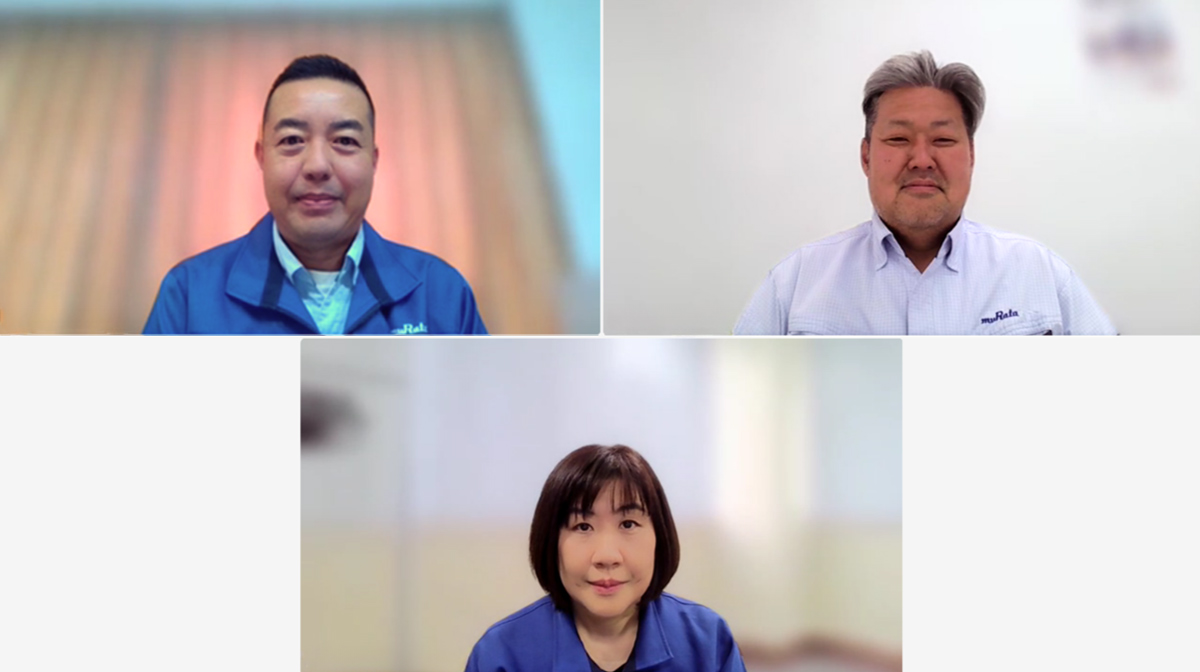
Top row from left: Oizumi (Project Manager), Shitani (Responsible for process setup) Bottom row: Matsuyama (In charge of creating systems for production management and material management)
Top row from left: Oizumi (Project Manager), Shitani (Responsible for process setup)
Bottom row: Matsuyama (In charge of creating systems for production management and material management)
Shintani:
The comprehensive backup system provided by the Yokaichi Plant members – who were always ready with the mindset of “I’ll do whatever I can” – gave me a profound sense of security. Likewise, the Anamizu Murata team, driven by their belief “This is about our own factory, so we want to take responsibility,” acted with initiative. Through this experience, I realized that production cannot happen if even one person is missing.
Oizumi:
To track progress, we maintained close communication. As the days passed, I felt a powerful bond forming among us. United under one goal, we shared the spirit of “Let’s do this together.” The sense of unity was extraordinary. It was challenging, but throughout the project, I witnessed the unwavering determination of every member to “deliver Murata products properly to our customers.”
Matsuyama:
Through this experience, I truly felt the spirit of “All Murata” – a sense of teamwork that transcended organizations and locations. The collective efforts embodied a strong and determined focus: “We can do it.” I believe the success of alternative production was made possible by Murata’s comprehensive strength.
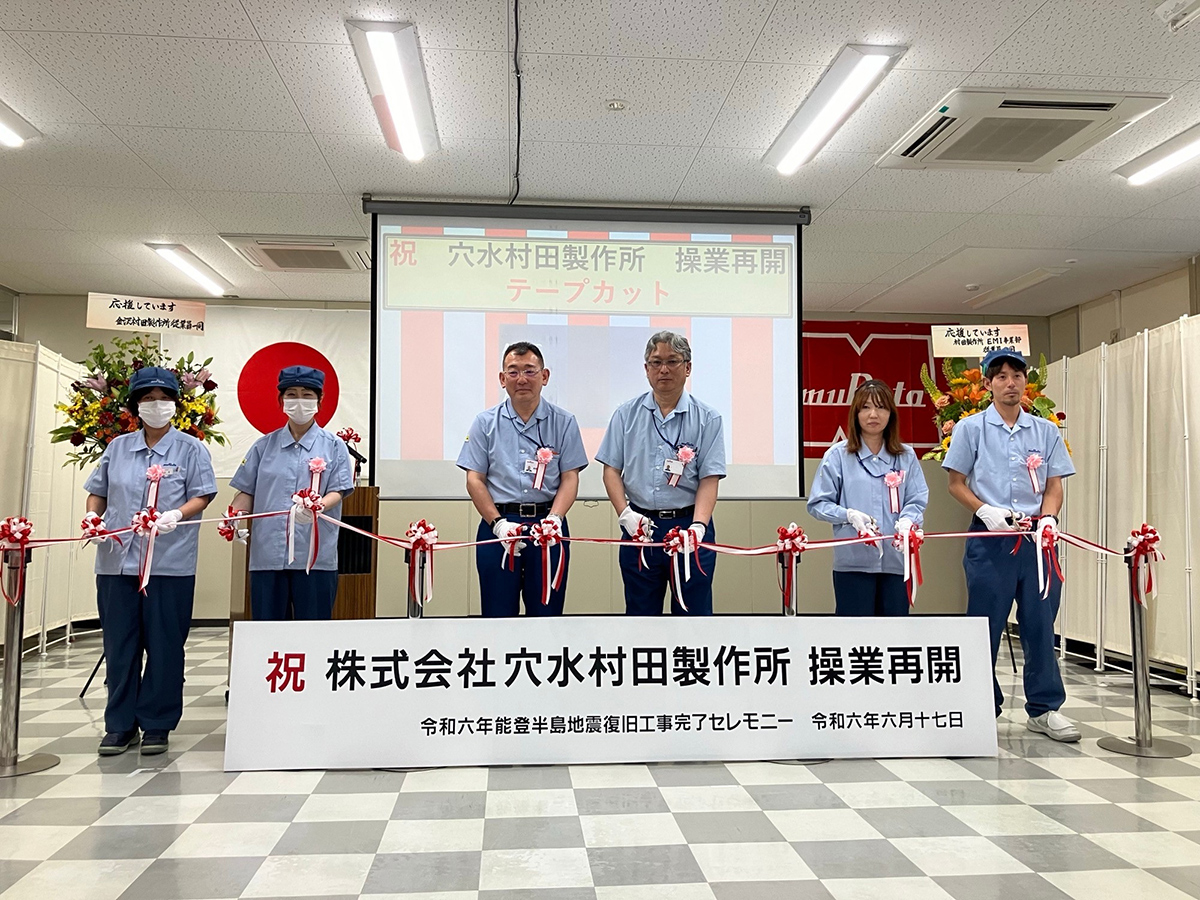
Operations will resume at Anamizu Murata on June 17, 2024.

Murata’s comprehensive strength—demonstrated by overcoming challenges and sustaining production—has been highly regarded by stakeholders.

The replacement production project led by Anamizu Murata earned high praise from customers and achieved Murata’s first-ever “Overdrive Award” at General Motors’ 33rd “Supplier of the Year.” This recognition reflects the trust built through close customer communication and rapid support, which enabled General Motors (hereafter referred to as GM) to maintain production despite severe disruptions.

To prevent any production stoppage, Murata even proposed alternative part numbers from competitors – a proactive step that drew deep, genuine appreciation from GM. These accolades highlight the dedication of the global sales team, Anamizu Murata, Yokaichi Plant, and other production bases and divisions that united under the “One Murata” spirit. Their collective strength ensured continuous production support and exemplified our philosophy : “being trustworthy.”

Reflections on the Award
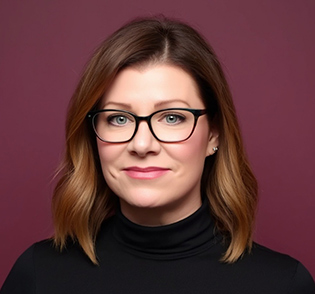
Jantz

Global Sales Team:

Jantz (Murata Electronics North America, Inc.)

On January 1, 2024, when I received the first report about the impact of the Noto Peninsula earthquake, I thought about my colleagues in Japan and considered what I could do as part of the team. I concluded that the most important thing was communication with our customers. We were thorough in providing basic support such as frequent status updates to customers, suggesting alternative part numbers, and deciding which products needed to be delivered first. I feel that by having all stakeholders work together as One Murata, we were able to strengthen trust with customers. I’m proud to have been able to attend the awards ceremony as a member of Murata. Moving forward, I will continue to contribute, however modestly, to further strengthening our partnership with customers and ensuring Murata is highly regarded in the Mobility industry as well.

At Murata, we have carried forward the spirit embedded in our philosophy as part of our DNA, enabling us to overcome countless challenges and become who we are today. Our ability to withstand the recent earthquake stems from our philosophy deeply ingrained in every employee and the collective strength of “One Murata.” The experiences and aspirations for recovery following the 2024 Noto Peninsula Earthquake, along with the strong bonds we have forged, will continue to inspire and guide the next generation.