Murata’s LQP Development Story — Leading the Way in Miniaturization, High Performance, and Market Leadership

Murata Manufacturing Co., Ltd. (hereinafter “Murata”) produces the high-frequency circuit RF inductor LQP, a compact electronic component widely used in high-frequency circuits for smartphones, automobiles, and more. Guided by its pioneering spirit and ethos of “supplying unique products,” Murata has consistently pursued innovation in product development, securing a majority market share. This story explores that journey through insights from Nagasaka and Toi, who spearheaded the development.

Members
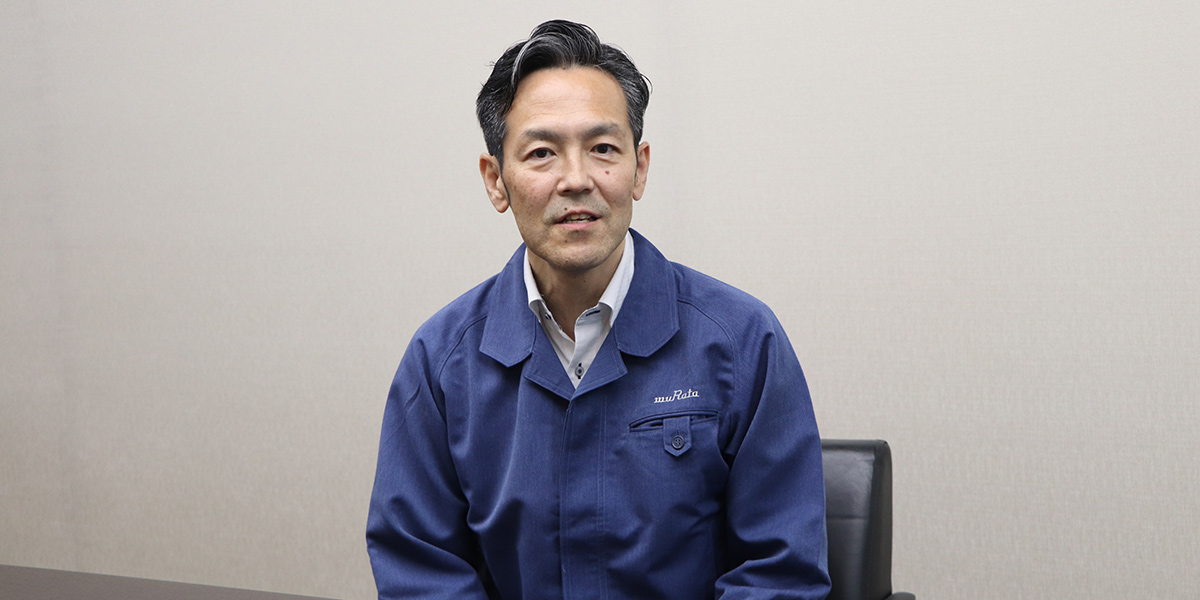
  • Components Business Unit: Nagasaka
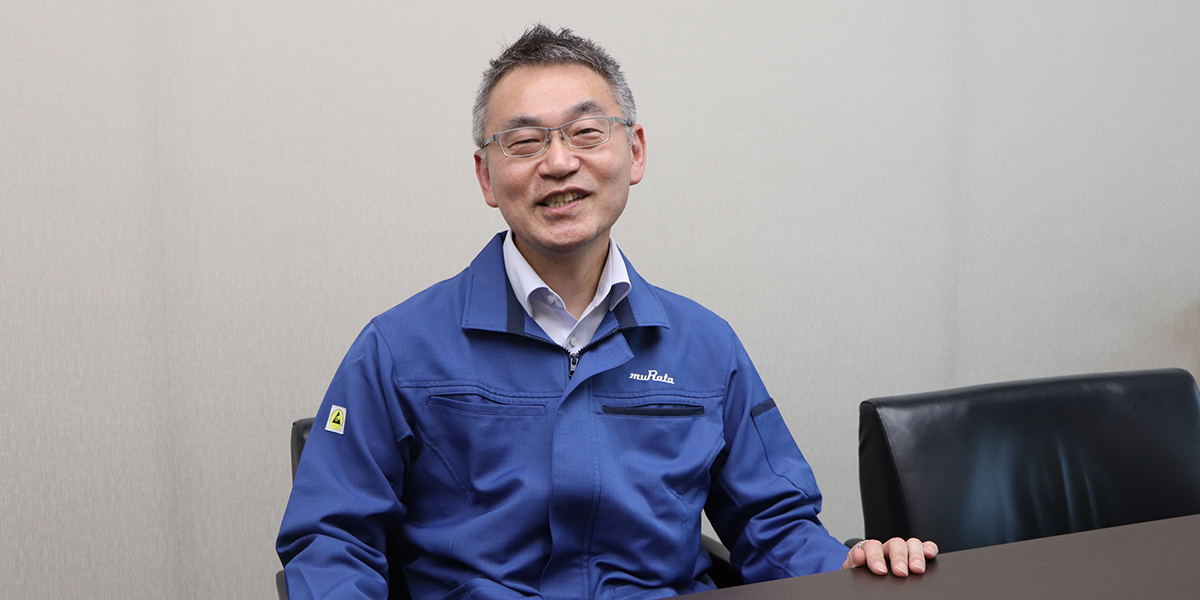
  • Components Business Unit: Toi

Driving Miniaturization and Performance Through Unique Manufacturing

How did Murata’s LQP come to life?

Nagasaka:
Initially, Murata manufactured inductors using a lamination process, similar to other companies. However, we realized this approach offered little differentiation, so we decided to take a different path. About 25 years ago, to achieve both miniaturization and enhanced performance, we applied photolithography – a technology commonly used in semiconductors. This breakthrough led to the birth of Murata’s LQP.
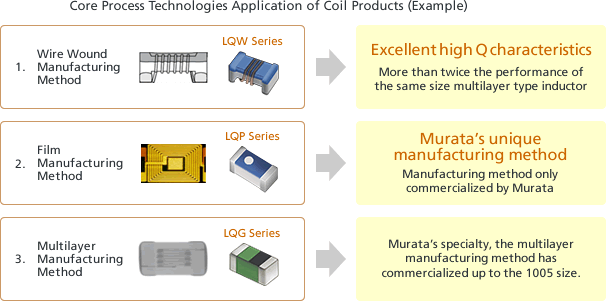
Inductors, which stabilize communications on circuit boards, can be produced using three methods. Murata’s photolithography-based process is unique, delivering reduced quality variation, superior performance, and enabling further miniaturization and lower component height compared to lamination.
Core Process Technologies Application of Coil Products (Example)
Toi:
When LQP first launched, market demand was limited, and sales were slow. But with the rise of smartphones, small, high-performance inductors became essential. It felt as though the market finally caught up with our vision for miniaturization, performance, and differentiated, unique manufacturing.
Nagasaka:
At one point, people thought we should stop because of the losses, but leadership saw where the market was headed and pushed us to keep going.

Where is LQP used today, and what is its market demand?

Nagasaka:
Today, LQP is indispensable in high-frequency circuits for smartphones and automobiles, ensuring stable communications.
For example, RF modules that handle wireless signals (Wi-Fi,Bluetooth®) are installed in multiple units within high-end smartphones. Murata’s LQP is used in about 80% of products from the world’s top five RF module manufacturers.
A single high-end smartphone typically contains around 10 RF modules, each requiring about 30 inductors – that’s roughly 300 LQPs per device.
Components Business Unit: Nagasaka

Leveraging 25 Years of Technical Expertise

Competition among RF module manufacturers is intense, isn’t it?

Nagasaka:
Absolutely. Each company seeks differentiation, so customer needs vary. Murata collaborates closely with customers, aligning technology several years ahead and offering customization – such as footprint and height adjustments – to meet those specific requirements.
Toi:
Building on that, customization in small quantities can be costly, so we balance price and performance to align with customer goals while building a product lineup that anticipates future demand. This approach both meets short-term needs and supports Murata’s mid- to long-term technology strategy.

How far ahead do you align strategies with customers?

Nagasaka:
Murata shares a technology roadmap that looks 3–4 years ahead with customers and often accelerates development based on their requests. Across the company, we plan 7–8 years into the future, allowing us to anticipate customer needs before they arise.
Toi:
True to our philosophy of “enhancing technologies and skills,” our teams are relentless in their pursuit of technical excellence – a passion that’s deeply woven into the strengths of LQP.
Nagasaka:
Another key advantage is our ability to maintain quality and ensure stable supply. Photolithography demands high-level expertise and accumulated know-how. By combining this with rigorous quality control and supply stability, we deliver exceptional value.

Can other companies use photolithography to make similar inductors?

Toi:
While others have photolithography capabilities, Murata has refined it specifically for high-frequency inductors, evolving methods over 25 years to achieve roughly double the initial performance. Our unique combination of miniaturization and performance is unmatched.
Additionally, Murata manufactures materials in-house – a capability difficult to replicate. We share detailed material data with production sites to eliminate performance variation. Quantifying all technical expertise since introducing photolithography reflects our philosophy of “applying scientific approach.”
Components Business Unit: Toi

Aligning product development with partners and production sites to contribute to societal progress

In May 2025, the company announced commercialization of an ultra-small LQP measuring 0.25×0.125 mm. How is development progressing?

Toi:
Smartphone makers seek more internal space for larger batteries. Compared to early models, the number of LQPs per device has nearly doubled, making ultra-miniaturization essential. Murata continues researching further miniaturization while maintaining ideal performance, which is similar to MLCC advancements.
However, mounting ultra-small inductors remains a challenge due to the lack of compatible equipment. Addressing this requires collaboration with mounting equipment manufacturers. Murata engages in joint R&D with partners, staying true to its principle of promoting company development and mutual prosperity with partners.

Do these efforts also contribute to competitor differentiation?

Toi:
I believe they do. Differentiation also depends on stable supply. If smartphones – now an everyday essential – cannot ship due to component shortages, it becomes a societal issue. Murata’s LQP brings together miniaturization, high performance, and precise production data to ensure stable manufacturing. This reflects our philosophy of contributing to the advancement of society by creating innovative products and solutions.
Our goal is simple: keep delivering innovations that move technology forward and enrich everyday life.