Murata and Society

Responsibility to and actions concerning suppliers (CSR procurement initiative)

Basic approach and policies

Murata’s procurement concept

In light of the spirit of the company creed, Murata developed a “virtuous circle of social value and economic value through innovation,” which was declared in Vision 2030, aiming to be a global number-one electronic component manufacturer that contributes to sustainable society and cultural development.
The Procurement Division also acts on the company creed, with “procurement with respect given to the environment and human rights” as one of its key themes in the medium-term direction. Its CSR procurement ensures compliance with laws and respect for proper labor conditions (human rights), the environment, and health and safety throughout the entire supply chain.
The sustainability issues surrounding the supply chain today are becoming more diverse and complex. Strategic efforts are in demand not only for climate change measures, resource circulation, and other environmental aspects, but also for social aspects such as labor safety and preventing human rights infringement. It is important that we take these actions throughout the supply chain and not just within Murata.
In 2022, Murata became a Participant of the Responsible Business Alliance (RBA), which is a company alliance that promotes CSR on the global supply chain. The Procurement Division extends the RBA Code of Conduct to the Murata Group Supply Chain CSR Procurement Guidelines, promoting fair business activities together with suppliers to whom we ask for their understanding of and compliance with the Guidelines.
The division will continue to promote efforts for sustainable CSR procurement aimed at sustainable improvement of corporate value while building good relationships with suppliers and other stakeholders.

Vice President Director of the Procurement Division
Kohei Miyao

Image of Kohei Miyao

Link: Click here if you wish to newly transact with Murata

Procurement Policy, Supplier selection criteria and CSR Procurement Guidelines

Following its philosophy, Murata aims to be a company that is trusted in society by taking on factors such as highly transparent governance, respect for human rights, health and safety, social contribution, and environmental conservation based on its high ethical standards while ensuring compliance with laws. To this end, Murata established the Corporate Ethics Policy as rules that all people working for Murata should observe. We also established the Procurement Policy aimed at strengthening our relationship with suppliers in terms of compliance with ethics and laws, focus on quality and lead time, and environmental conservation. The Procurement Policy consist of the “Basic Procurement Policies” and “Procurement Code of Conduct,” both of which present the concept of and action/judgment standards for Murata’s procurement activities, as well as “Murata Group Supply Chain CSR Procurement Guidelines” which present the concept of and action/judgment standards for CSR procurement expected of our suppliers.
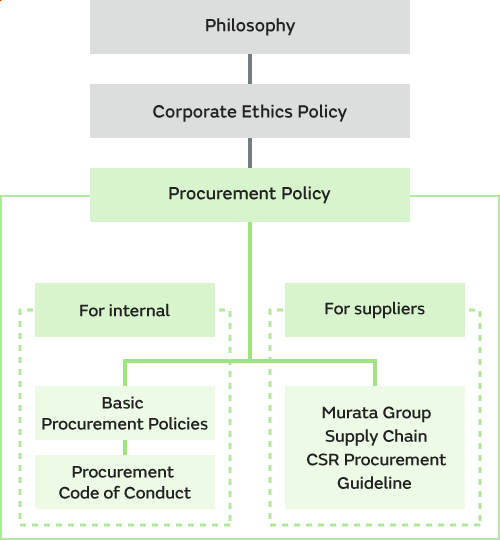
CSR procurement policy system diagram
Procurement Policy

Murata is working to realize a sustainable society based on the company's management philosophy. Under this philosophy, the company engages in activities based on a "Procurement Policy" which consists of the "Basic Procurement Policies" and "Procurement Code of Conduct." By acting in accordance with the "Procurement Policy," we build strong partnerships with suppliers and cooperative relationships from a long-term perspective with the goal of realizing a sustainable society throughout the supply chain.

Link: Murata Group Murata Corporate Ethics Policy and Code of Conduct (PDF: 4.10MB) Open the New Window
Link: Basic Procurement Policies and Procurement Code of Conduct

Supplier selection criteria

We fairly and equitably evaluate and select suppliers based on rational criteria such as consideration for quality, delivery date, continuation of supply, business conditions, product technical capabilities, human rights and labor, environmental conservation, safety and health, ethics (including the prevention of corruption), BCP, and information security.

Link: Supplier selection criteria (PDF: 43KB)Open the New Window

CSR Procurement Guidelines

We have adopted the RBA (Responsible Business Alliance) Code of Conduct aimed at achieving CSR procurement. Based on the RBA Code of Conduct, we established the Murata Group Supply Chain CSR Procurement Guidelines (hereinafter, the “Guidelines”) in 2020, which add information security, business continuity planning (BCP), and import and export controls, etc. We regularly review and revise the Guidelines in line with the revision of the RBA Code of Conduct, and issued the 4th version in September 2025. This revision further strengthens our initiatives to build a sustainable supply chain. Furthermore, we continuously monitor compliance with the Guidelines. If satisfactory improvement is not made by the supplier after Murata requested corrective actions and provided necessary support, Murata may consider terminating the contract or discontinuing the business relationship.

Link: Murata Group Supply Chain CSR Procurement Guidelines (Japanese) (PDF: 1.33MB)Open the New Window
Link: Murata Group Supply Chain CSR Procurement Guidelines (English) (PDF: 469KB)Open the New Window
Link: Murata Group Supply Chain CSR Procurement Guidelines (Chinese) (PDF: 760KB)Open the New Window

Items included in the Guidelines
LABOR
  • 1. Prohibition of Forced Labor
  • 2. Young Workers
  • 3. Working Hours
  • 4. Wages and Benefits
  • 5. Non-Discrimination/Non-Harassment/Humane Treatment
  • 6. Freedom of Association and Collective Bargaining
  • 7. Reducing long working hours
HEALTH and SAFETY
  • 1. Occupational Health and Safety
  • 2. Emergency Preparedness
  • 3. Occupational Injury and Illness
  • 4. Industrial Hygiene
  • 5. Physically Demanding Work
  • 6. Machine Safeguarding
  • 7. Sanitation, Food, and Housing
  • 8. Health and Safety Communication
  • 9. Employee Health Management
ENVIRONMENT
  • 1. Environmental Permits and Reporting
  • 2. Pollution Prevention and Resource Conservation
  • 3. Hazardous Substances
  • 4. Solid Waste
  • 5. Air Emissions
  • 6. Materials Restrictions
  • 7. Water Management
  • 8. Energy Consumption and Greenhouse Gas Emissions
ETHICS
  • 1. Business Integrity
  • 2. No Improper Advantage
  • 3. Disclosure of Information
  • 4. Intellectual Property
  • 5. Fair Business, Advertising and Competition
  • 6. Protection of Identity and Non-Retaliation
  • 7. Responsible Sourcing of Minerals
  • 8. Privacy
MANAGEMENT SYSTEM
  • 1. Company Commitment
  • 2. Management Accountability and Responsibility
  • 3. Legal and Customer Requirements
  • 4. Risk Assessment and Risk Management
  • 5. Improvement Objectives
  • 6. Training
  • 7. Communication
  • 8.    Worker/Stakeholder Engagement and Access To Remedy
  • 9.    Audits and Assessments
  • 10. Corrective Action Process
  • 11. Documentation and Records
  • 12. Supplier Responsibility
BUSINESS CONTINUITY MANAGEMENT (BCM)
  • 1. Development and Management of a BCP
  • 2. Identification of Important Materials and Risk Measures
  • 3.  Understanding of the Supply Chain
  • 4.  Impact Investigation in Disaster
INFORMATION SECURITY

Joining the RBA

RBA logo

In June 2022, Murata became a Participant of the Responsible Business Alliance (RBA), which is a company alliance that promotes corporate social responsibility on the global supply chain. The RBA is a business alliance that promotes corporate social responsibility in global supply chains. By sharing the RBA’s vision and mission with suppliers, based on the RBA Code of Conduct, we aim to contribute to achieving a sustainable society.
In terms of supply chain management, we implement reviews using the VAP and other RBA methods and techniques, as well as initiatives to guide improvements.

Link: Murata member organization

CSR procurement promotion system

Murata has issued the "Murata Group Supply Chain CSR Procurement Guidelines" and is working to instill the CSR procurement approach that we have our suppliers observe and put into practice. In addition, information on the states of compliance and any issues with the different areas of CSR procurement within the company are shared with top management, and decisions are made regarding these matters. The different areas of CSR procurement involved include namely "human rights and labor," "health and safety," "environment," "ethics," and "management systems" under the CSR Management Committee established directly under the president and areas including "BCP" and "information security" under the Risk Management Committee. Topics discussed by each Committee are supervised by the Board of Directors.
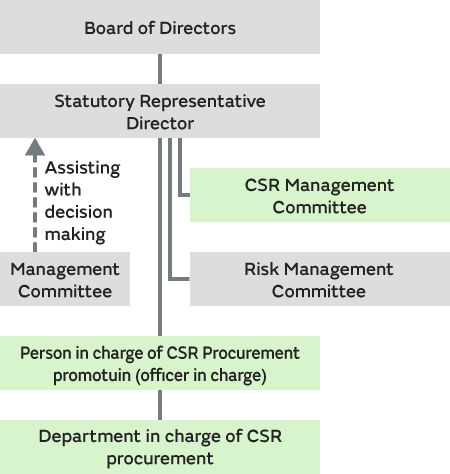
CSR procurement promotion system

Link: Murata’s Corporate Governance System

Supplier evaluation and correction

Murata has self-assessments and CSR audits in place to help its suppliers recognize their compliance status with the Guidelines and independently take necessary corrective actions. For any risks that were found through self-assessments or CSR audits, Murata requests corrective actions from the supplier and offers support when necessary.

Supply chain conditions

Conditions within the Murata group supply chain are as follows. (as of fiscal 2024)

Ratio of the number of suppliers by region
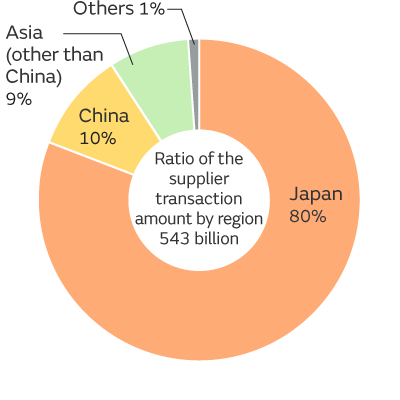
Ratio of the supplier transaction amount by region

Identification of significant suppliers

Based on the following concept, Murata identifies “significant suppliers” by considering their ESG (E: environment, S: society, G: governance) risks, monetary value of transaction, and substitutability. During fiscal 2024, we identified 98 partners as significant suppliers.

  • Condition 1: Murata evaluates whether the company satisfies its evaluation criteria in terms of ESG, quality and chemical substance management, and finance.
  • Condition 2: In addition to condition 1, Murata identifies significant suppliers by considering the monetary value of transaction, importance in relation to product functionality, substitutability, and other procurement strategy-related aspects.
Condition 1 is also applied to suppliers that Murata starts a new business relationship with.

(1) Acceptance conditions when starting a new business relationship

  1. Evaluation of environmental risks
    Supplier has acquired third-party EMS certification
  2. Evaluation of social risks
    Supplier complies with the Murata Group Supply Chain CSR Procurement Guidelines
  3. Governance evaluation
    Supplier has entered into a master trade agreement
  4. Evaluation of quality and chemical substance management risks
    Supplier complies with the Supplier’s Quality and Chemical Substance Management Manual
  5. Evaluation of financial risks
    Supplier’s financial standing meets Murata’s standards

Murata selects candidates from among suppliers that meet the above conditions

(2) Specific conditions for significant suppliers

  1. Monetary value of transaction
    Among the top 80% of the entire transaction amount
  2. Importance in relation to product functionality
    Key parts or materials
  3. Substitutability
    Impossible or difficult to find/procure an alternative
  4. Other procurement strategy-related aspects

Murata selects candidates from among suppliers that meet the above conditions

Significant suppliers

Specific flow for selecting significant suppliers

Initiatives to promote suppliers’ CSR procurement

For the purpose of having suppliers work on reducing CSR risks, Murata is advancing its CSR procurement promotion process in the following three steps.
(Step1) First, Murata requests suppliers to perform procurement activities based on the Guidelines.
(Step2) Next, Murata conducts CSR risk assessments of its suppliers, considering the following:

  • CSR audits (on-site audits) by Murata for 100 suppliers from fiscal 2022 to fiscal 2024 and their statistical verification results
  • Results of assessments by “EcoVadis*”, which evaluates corporate sustainability performance, conducted for all suppliers

(Step3) Based on the results above, Murata conducts self-assessments and audits.
The Step 2 assessment results drive efficient and effective risk assessment and improvement. If an audit is deemed necessary according to the result of the self-assessment, Murata conducts a CSR audit.

This initiative is planned to complete one cycle over the next 3 years.
For any risks that were found through self-assessments or CSR audits, Murata requests improvements from the supplier and offers support for such improvements when necessary.

Link: EcoVadisOpen in New Window

  • *EcoVadis is a company that provides reliable sustainability assessments. It monitors the performance of companies and their partners using a professional evaluation system, and provides improvement proposals. It offers support to improve environmental, social, and ethical aspects through scorecards and decarbonization tools, covering 250 industries and 185 countries.
Image of Initiatives to promote suppliers’ CSR procurement

CSR procurement targets and 2024 performance

Murata set targets for fiscal 2022 through 2024 and are working toward achieving CSR procurement that ensures compliance with laws and respect for proper labor conditions (human rights), the environment, and health and safety throughout the entire supply chain.

KPI Targets for fiscal 2022 to 2024 Fiscal 2024 performance Targets for fiscal 2025 to 2027
Rate of agreement signed for compliance with the CSR Procurement Guidelines for Murata Group supply chain (Signing an agreement for compliance with the Guidelines) 95% 97% 95%
Ratio of CSR evaluation improvement 100% 94% 95%
Ratio of CSR audit execution 95% 100% 100%

CSR procurement request

Murata issues CSR procurement guidelines to help suppliers understand our concept of CSR procurement. The guidelines are distributed to all suppliers, and as a condition for starting business with Murata, we request that they sign a “CSR Agreement,” practice the guidelines (covering human rights, health and safety, environment, ethics, information security, etc.), and extend them to their supply chains. In fiscal 2024, we attained a guidelines compliance contract rate of 97%.

Self-assessment

Murata conducts annual self-assessments for its significant suppliers to help them recognize their compliance status with the Guidelines and take necessary corrective actions if required. In addition to “labor,” “health and safety,” “environment,” “business ethics,” and “management system,” which are compliant with the RBA Code of Conduct, the assessment items include Murata’s unique items such as “business continuity management” and “information security.” Furthermore, Murata aims to detect risks at an early stage and promote improvement by expanding the scope to include suppliers identified by its verification results and EcoVadis assessment results.
Based on the results of the assessments, Murata classifies the suppliers’ risk levels into three ranks: A (low risk), B (middle risk), or C (high risk). For suppliers ranked B or C, we not only request corrective actions but also offer necessary support for improvement. We conduct on-site status verification and improvement guidance through audits, particularly for suppliers ranked C, promoting initiatives aimed at building a sustainable supply chain.
Murata requested self-assessment from 98 significant suppliers and achieved a 100% response rate during fiscal 2024. Among the 98 suppliers, 95 suppliers were ranked A, and 3 were ranked B. We confirmed that no suppliers were ranked C.
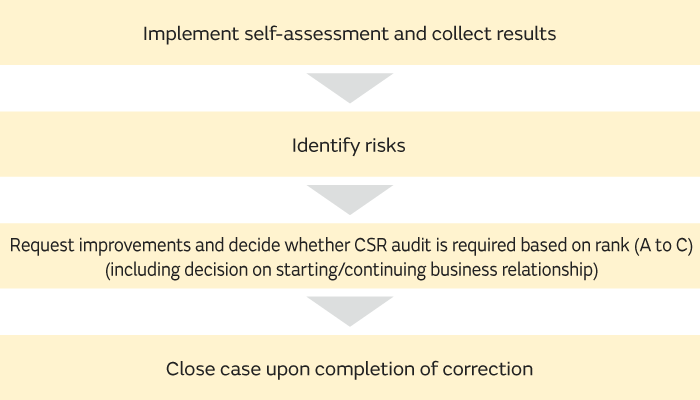
Self-assessment process

[Self-assessment results]

Fiscal 2022 Fiscal 2023 Fiscal 2024
Number of existing significant supplier document audits 100 125 98
Response receipt rate Target 100% 100% 100%
Result 99% 94% 100%

[Evaluation ranks and results]

Rank Risk level Criterion Action Fiscal 2024 results
A Low risk Overall score 80% or higher Murata requests cooperation to maintain the current level. 95
B Middle risk Overall score 50-79% Murata requests improvements and provides support as needed. 3
C High risk Overall score 49% or lower Murata requests improvements for non-conformities, and conducts CSR audit and provides support as needed. 0
Corrective action

During fiscal 2024, three B-rank suppliers required corrective actions.
The major corrections requested included:

  • Extending the application of our guidelines to their supply chains
  • Creating procedures for responding to the leakage of company secrets
  • Implementing initiatives to reduce greenhouse gases

When requesting corrective actions, Murata engaged in direct dialogues with the suppliers to ensure that they understood the necessity of the actions while providing explanations of the identified non-conformities and the requirements that needed to be met. As a result of these dialogues, all three suppliers promptly addressed our requests and successfully implemented the required corrective actions.

CSR audit

As shown below, based on CSR risks, Murata conducts CSR audits both to understand suppliers’ status of compliance with the Guidelines and to help them deepen their understanding of Murata’s procurement policies and Guidelines.

  • Audits have been conducted for approximately 100 significant suppliers that account for approximately 80% of transaction value from fiscal 2022 to fiscal 2024. Corrective measures are implemented depending on results, and improvement support and follow-up audits are conducted if required.
  • Audits are conducted for all suppliers that do business with Murata based on Murata’s verification results and EcoVadis assessment results. Based on risk assessments, audits are being conducted starting with the highest-priority suppliers.
  • We closely review the self-assessment results and conduct additional audits if deemed necessary. This enables the early detection of and response to potential risks.

In fiscal 2024, we conducted CSR audits for a total of 33 significant suppliers. Based on the audit results, we take corrective measures and provide improvement support, promoting initiatives to build a sustainable supply chain. The audits are conducted in compliance with the RBA VAP by Murata and third-party specialized organizations. In addition to desk-based document verification, we comprehensively verify the actual conditions of our suppliers by using diverse methods, including on-site observations, employee interviews, and reviews of actual work hours.

CSR audit process

[CSR audit cases]

Fiscal 2024 Total for fiscal 2022 to 2024
Audits conducted 33 103
Area Japan 17 59
China 9 25
ASEAN 3 11
Other 4 8

[Evaluation ranks and results]

Rank Risk level Criterion Action Fiscal 2024 results
A Low risk A total score of 80% or higher, and no priority or major non-conformities Murata requests improvements for non-conformities and provides support as needed. 14
B Middle risk A total score of 50-79%, or non-conformities are neither an A nor C-rank level Murata requests improvements for non-conformities and provides support as needed. 19
C High risk A total score of 49% or below, or having priority non-conformities Murata requests improvements for non-conformities and conducts another CSR audit to check improvements. 0
Corrective action

Suppliers are categorized into three ranks –A, B, or C– based on their CSR risk levels, following a similar approach to the self-assessment process. If non-conformities are identified, Murata requests the suppliers to take corrective actions and provides support to resolve the problems, regardless of their ranks. For C-ranked suppliers, Murata performs a re-audit after they have completed corrective actions, to verify the effectiveness of the actions.
The fiscal 2024 CSR audit results showed that 14 suppliers were classified as A rank, while 19 were ranked B, with none falling into C rank.
The major corrections requested included:

  • Consecutive working days of seven or more
  • Long working hours exceeding 60 hours per week
  • Objects placed in the evacuation paths
  • No evacuation route maps or emergency exit lighting placed on-site.

Murata notifies the suppliers of all issues that require correction on the day of the audit, and immediately initiates discussions and provides on-site advice for corrective actions.

Non-conformity Initiatives for corrections
Consecutive working days of seven or more Murata advised that excessive numbers of consecutive working days and long working hours can negatively affect workers' health, and also provided guidance on managing working hours properly and ensuring that the workplace regulations are observed by supervisors and employees alike.
Long working hours exceeding 60 hours per week
Objects placed in the evacuation paths Murata informed that any objects obstructing the evacuation paths can hinder safe passage and delay evacuation and that the absence of displayed evacuation maps or emergency exit lighting can also make it difficult to identify the proper routes, increasing the evacuation time. Murata requested securing appropriate evacuation routes and installing both evacuation maps and emergency exit lighting in place.

Initiatives with suppliers

Dialogues with and awards program for suppliers

Dialogues with suppliers

Through CSR audits, Murata engages in direct dialogues with suppliers to communicate the significance of adhering to its procurement policies and Guidelines. These audits also serve as a platform to exchange views on the progress and challenges of their CSR initiatives, fostering collaborative discussions to identify solutions. As a result of these audits, Murata has received words of gratitude from the suppliers.

Before the audit
Murata holds one-on-one briefings with the suppliers to explain the audit's purposes and methods/items, as well as the necessity of complying with its guidelines and fulfilling corporate social responsibilities.

On the day of the audit
Murata not only identifies non-conformities but also explains their causes and collaborates with the suppliers to determine corrective actions through discussions.

After the audit (corrective actions)
Murata proposes specific corrective actions and provides advice based on each supplier's situation, collaborating with them to address the non-conformities.

Awards program

Murata recognizes suppliers that have given us great assistance in achieving CSR procurement in addition to their contributions in terms of improvement of quality and delivery, cost reduction activities, and technological innovation, by presenting them letters of appreciation. Through this commendation, Murata conveys its gratitude to suppliers and seeks to build a continuous trust relationship.
For fiscal 2024, Murata recognized three suppliers for their contributions to Murata's sustainable environmental initiatives.

Recognition examples:

  • Investing in equipment and adopting recycled solutions to eliminate toluene –a solvent harmful to human health– from the manufacturing processes
  • Visualizing recycle rates and achieving horizontal recycling for specific product types

CSR procurement concerning environmental issues

Initiatives

Under the common understanding that protection and conservation of the global environment is imperative for the sound and continuous development of the human society, countries around the world are rapidly enacting environmental protection laws and regulations. Against this backdrop, Murata established the Murata Group EHS Disaster Preparedness Policy as one of the codes of practice for Murata’s corporate slogan and management philosophy and is working on environmental conservation.

For our parts procurement activities, we declare “environmentally-friendly parts procurement” in our procurement code of conduct and promote prioritized procurement from suppliers that actively engage in environmental initiatives, including manufacturing products with minimal environmental burden (green procurement). Through these efforts, Murata is striving to reduce the environmental burden across its entire supply chain.

Link: Murata Group EHS Disaster Prevention Policy

Green procurement

In order to reduce the environmental load of products, "green procurement" is required to procure materials with a low environmental load. At Murata, we ask for the understanding and cooperation of suppliers in putting environmental management into practice.

When conducting new business, we ask that our partners address global environmental problems such as climate change and environmental pollution based on the "Murata Group Supply Chain CSR Procurement Guidelines." Moreover, in addition to asking to verify the certification status of suppliers under environmental management systems (ISO 14001, etc.), we audit the state of chemical substance control at the manufacturing sites to determine whether we can do business with a supplier. After we have started doing business with a supplier, we ask them to periodically fill out the CSR Checklist and continuously verify the status of initiatives for environmental problems and the results of improvement at suppliers.

Link: Green procurement

Global climate countermeasures and use of sustainable resources

With the changing global environment, promoting decarbonization and fostering a recycling-based society have emerged as key themes. Murata promotes global climate initiatives and use of sustainable resources to contribute to the realization of sustainable society.
Category 1 (purchased goods and services) accounts for over half of Murata’s Scope3 GHG emissions. For this reason, it is essential to have the cooperation of suppliers to promote our efforts for reducing GHG emissions. To ensure sustainable use of resources in Murata’s business activities, collaboration with our suppliers is essential.

Following the previous fiscal year, Murata held its FY2024 environmental activity policy briefing, with participation from over 250 companies. The session highlighted the urgency of decarbonization and sustainable resource use, while also encouraging the participants to promote environmental activities. In addition, Murata continues to hold one-on-one interviews with the suppliers, offering guidance on their GHG calculations and engaging in discussions aimed at reducing GHG emissions.

Image of Global climate countermeasures and use of sustainable resources

Link: Reduction of GHG Scope3
Link: Efforts for use of sustainable resources

Collaborations with industry organizations

Murata participates as a member of JEITA (Japan Electronics and Information Technology Industries Association) and as a founding member of JAMP (Joint Article Management Promotion-consortium), whose purpose is "to appropriately manage the information on chemical substances contained in an article and to establish and disseminate a system to smoothly disclose and transmit the information through the companies in the supply chain." We are actively cooperating with industry organizations on issues that are difficult to solve as an individual company such as creating industry-wide frameworks.

Link: JAMP (Joint Article Management Promotion-consortium)Open in New Window
Link: Member ListOpen in New Window
Link: JEITA (Japan Electronics and Information Technology Industries Association)Open in New Window
Link: JEITA MembersOpen in New Window

Initiative regarding human rights and labor

Concerns about forced labor, child labor, and other human rights risks in the supply chain are increasing. As an initiative to reduce these risks, at Murata we also ask suppliers to observe the Guidelines while also monitoring the state of compliance through the self-assessment and initiating corrections as needed. For significant suppliers, we also conduct CSR audits. Through audits by third-party organizations, we will identify human rights risks professionally and objectively, as well as facilitate improvements based on the results of audits and through discussions with the suppliers. Moreover, regarding forced labor, child labor, and other human rights violations under harsh labor environments at small-scale mines, Murata actively promotes responsible mineral procurement activities and appropriately discloses information in response to customer demand.

Link: Murata Group Human Rights Policy
Link: Declaration regarding the modern slavery act (United Kingdom)Open in New Window
Link: For all stakeholders (Japan Center for Engagement and Remedy on Business and Human Rights (JaCER))(*Link to Japanese language page)

Procurement BCP

In order to provide a stable supply to our customers even in times of emergency, the Murata group deepens its ties with its partners on a regular basis and advances the following initiatives.

Emergency situations

Earthquakes, tsunami, fire, floods and other wide-area disasters, accidents, compliance violations, infectious disease, and other unforeseen circumstances

BCP (Business Continuity Planning) procurement initiative
  • Prior collection of information to be used in an emergency and a rapid initial response
    In order to verify the damage suffered by business partners, status of their safety, and supply conditions in times of emergency, we have created a database of manufacturing locations, etc. and other information which includes secondary business partners.
    We are building a system to extract information about business partners to be verified together with disaster information particularly during urgent natural disasters, and we are working on an initial response system.
  • BCP/BCM survey of business partners
    In addition to surveying business partners regarding the status of BCP initiatives, we are requiring them to promote BCP activities as needed.

Internal initiatives

Implementing buyer education

In order to achieve a sustainable society together with the entire supply chain, it is essential for the buyers to practice the concept of CSR procurement. As part of necessary training for procurement activities, Murata provides CSR procurement education on topics such as human rights and labor, health and safety, environment, and information security to buyers based on the Guidelines upon their assignment and once a year. Additionally, to maintain compliance in subcontracting, we provide Subcontract Act seminars via e-learning to buyers every year. The participation rate in fiscal 2024 was 100% for both training programs.

Link: Respect for Human Rights
Link: Information security
Link: ESG data collection

Promotion of responsible mineral procurement

It is feared that the procurement of some minerals sourced from the Democratic Republic of the Congo (DRC), its neighboring countries, and other conflict-affected and high-risk areas (CAHRAs)*1 may provide funding for armed groups and lead to human rights violations such as forced labor and child labor, environmental destruction, money laundering and wrongdoing. These minerals include 3TG*2, cobalt, and mica. To prevent involvement in the Annex Ⅱ *3 risks related to the DRC, its neighboring countries, and other CAHRAs, we will continue to implement appropriate assessment based on the OECD Due Diligence Guidance and avoid using any minerals in Murata products that may be linked to wrongdoing.

Responsible mineral procurement response policy

  • 1.

    Address as part of CSR procurement activities based on the Murata Manufacturing Corporate Ethics

  • 2.

    Build a management system for target minerals included in Murata products which complies with "OECD Due Diligence Guidance"

  • 3.

    Utilize the system above and continuously strive to use lower risk materials to prevent the funding of armed groups, protect human rights, promote fair trade, and promote responsible procurement of minerals used by the company in the company's supply chain for minerals such as gold/tin/tantalum/tungsten/cobalt/mica/copper/nickel/lithium/natural graphite, etc.
    Also, avoid engaging in procurement from companies which fall under Annex Ⅱ risks for conflict and human rights violations, etc. in Conflict-Affected and High-Risk Areas (CAHRAs)

  • 4.

    Closely cooperate with industry organizations to carry out rational and efficient surveys based on global standards in good faith

  • 5.

    Share information regarding minerals obtained through the supply chain with partner companies as soon as possible

Promotion system

Murata regards this as part of its corporate social responsibility (CSR) and conducts surveys in compliance with global standards and provides information based on its response policy.
Furthermore, as an internal framework, the CSR management committee, chaired by the president, shares information with top management on activities, progress, and any issues regarding responsible mineral procurement, and makes any resulting decisions.

Promotion system diagram

Initiative details

We have established a response policy to promote responsible mineral procurement and are building a system to manage the potential for any Annex Ⅱ risks in CAHRAs for target minerals included in our products. We conduct surveys in compliance with the RMAP*4 industry standard and evaluations in accordance with internal standards to identify smelters and refiners in the supply chain. If we discover the use of high-risk smelters and refiners, we communicate the details of these risks to our suppliers and require that they switch to RMAP-certified smelters and refiners.
Through repeated communication, we have succeeded in helping our suppliers transition to RMAP-certified smelters.

Link: Information and awards program for suppliers

Every year, Murata receives over 5,000 customer requests to provide supply chain information. Based on the results of responses from our suppliers, we report this information based on the CMRT and EMRT issued by the RMI*5.

Efforts for compliance with 5-Step framework of OECD Due Diligence Guidance

In order to reduce the Annex Ⅱ risks of human rights violations in CAHRAs, such as human rights violations for 3TG and cobalt in our products, Murata is committed to the following initiatives in compliance with the OECD Due Diligence Guidance.

5-Step Framework for OECD Due Diligence Guidance
Step 1: Establish strong company management systems
Step 2: Identify and assess risks in the supply chain
Step 3: Design and implement a strategy to respond to identified risks
Step 4: Carry out independent third-party audit of smelter/refiner’s due diligence practices
Step 5: Report annually on supply chain due diligence

Step 1: Establish strong company management systems

  • Murata has established a “Responsible Mineral Procurement Response Policy” and a system to manage any Annex Ⅱ risks in CAHRAs for the minerals contained in our products.
  • responsible minerals sourcing initiatives and issues are regularly shared with top management in the CSR management committee for decision making.
  • We make our policies known through our website and other media, and we ask our suppliers to agree with us on initiatives based on Murata’s policies.
  • To identify smelters/refiners in the supply chain, we conduct surveys based on industry standards (RMAP) for domestic and international suppliers.
  • Every year, we send our suppliers an invitation to the JEITA’s*6 annual responsible minerals sourcing inquiry briefings and invite them to attend workshops on the latest industry trends and current issues.

Step 2: Identify and assess risks in the supply chain

  • We regularly conduct smelter/refiner surveys using the CMRT and EMRT issued by the RMI.
  • We require our suppliers to use smelters/refiners that have been certified under the audit program of a third-party institution.
  • Our surveys include confirmation of 3TG, cobalt, mica, copper, nickel, lithium, and natural graphite content, confirmation of country of origin, and identification of smelters/refiners.
  • We conduct risk assessments in accordance with internal standards on the smelter/refiner information reported by our suppliers and the management system for responsible minerals sourcing.
  • For identified smelter/refiners, we review RMI audit reports, websites, and other sources of information that may lead to risk as needed.

Step 3: Design and implement a strategy to respond to identified risks

  • Suppliers are asked to work for human rights and to reduce conflict risk in accordance with Murata’s responsible mineral procurement policy. If we use high-risk smelters/refiners, we communicate the details of the risks and discuss appropriate measures for improvement with our suppliers.
  • If a company’s relationship with an Annex Ⅱ risk, such as a relationship with armed forces or human rights violations, is identified, we will consider suspending the transaction.

Step 4: Carry out independent third-party audit of smelter/refiner’s due diligence practices

  • As a member of the RMI and the JEITA responsible minerals trade working group, Murata works at the industry level to address issues that are difficult for individual companies to resolve.
    For example, we provide speakers at industry-sponsored explanatory meetings and encourage smelters/refiners who do not participate in RMAP to undergo the validation process.

Step 5: Report annually on supply chain due diligence

  • Reports on Murata’s actions in responsible minerals sourcing are published on the website and in a consolidated report.

Survey results and issues

At Murata, we regularly conduct surveys of our suppliers to check for Annex Ⅱ risks concerning CAHRAs for the relevant minerals contained in their products. As a result of the responsible minerals survey conducted in fiscal 2024 across 174 major suppliers, we confirmed that the percentage of RMAP-certified smelters is 96% of all smelters. Through previous conflict mineral surveys, we confirmed that our mainstay products such as multilayer ceramic capacitors, inductors, thermistors, and ceramic resonators are already conflict-free.

Fiscal 2024 responsible mineral procurement survey results

gold tin tantalum tungsten cobalt all
RMAP conformant smelter and refinery usage rate 94% 98% 100% 97% 92% 96%

Murata broadly recognizes three issues and believes that it is important to advance initiatives to solve these issues.

Theme: (1) RMAP-certified smelter and refinery usage rate
<Issue>
While Murata continues to request the use of RMAP-certified smelters and refiners, it is difficult to completely guarantee that our products are not involved with any Annex Ⅱ risks due to the increasing number of smelters and refiners that fail the RMI audit protocol.
<Initiative>
In addition to continuing to request suppliers to convert their smelters and refiners to RMAP-certified ones, through the industry, Murata will encourage smelters and refiners to receive audits again.
Theme: (2) Initiative to reach a 100% response rate in the cobalt survey
<Issue>
Notably, some small firms that have not established a management system are requested to improve their risk management to ensure responsible mineral procurement. They may also take a long time to complete the survey or may submit doubtful responses in terms of accuracy.
<Initiative>
Murata will provide training to deepen their understanding of the surveys through the industry’s briefing materials.
Theme: (3) Due diligence implementation related to conflict minerals of our suppliers
<Issue>
Given the extensive use of copper and nickel in various applications and across numerous Murata products, the survey process may require considerable time to complete.
<Initiative>
We conduct the survey in compliance with EU battery regulations and other applicable laws.

Initiative to address issues through industry actions

Murata is a member company of industry organizations such as the JEITA “Responsible Minerals Trade Working Group” and RMI*7. We are proactively working on issues that are difficult to solve as an individual company, such as creating industry-wide frameworks.

Initiative (1):
For cobalt, there are still many refiners that do not participate in the RMAP. As a member of the JEITA “Smelter Support Team”*8, we carry out activities to encourage smelters and refiners that do not participate in RMAP to undergo the validation process.

Initiative (2):
We participate in the operation of the “Responsible Minerals Sourcing Inquiry Briefings” hosted by JEITA and share the latest information with suppliers and many other companies through these briefings to educate and enlighten them so as to deepen their understanding of the importance of this initiative.

Image of responsible minerals sourcing inquiry briefings

Initiative (3):
Regarding worries about the risks of new minerals, we are clarifying the problems, proposing mechanisms, and engaging in other active debates at the JEITA working group to make proposals to RMI so that RMAP support may proceed in an efficient manner.

  • *1 

    Conflict-Affected and High-Risk Areas (CAHRAs)

  • *2 

    Tin, tantalum, tungsten and gold

  • *3 

    Material risks that may occur in relation to mining, trading, dealing, and exporting of minerals from CAHRAs.
    - Human rights violations (child labor, etc.) relating to the mining, transport, and trade of minerals
    - Direct or indirect support for non-governmental armed groups
    - Illegal acts by public or private security forces (protection money)
    - Corruption or falsification of mineral origin
    - Money laundering
    - Nonpayment of taxes to the government, fees, and mining right fees (tax evasion)

  • *4 

    Responsible Minerals Assurance Process
    Smelter and refinery recognition program by RMIOpen in New Window

  • *5 

    RMIOpen in New Window

  • *6 

    JEITA "responsible minerals trade working group"Open in New Window

  • *7 

    RMI MembersOpen in New Window

  • *8 

    JEITA Smelter Support TeamOpen in New Window

Statement on certain reports regarding the procurement of mica

Murata has carried out an investigation in response to certain reports regarding the procurement of mica. Details can be found at the link below.

Link: Statement on Certain Reports Regarding the Procurement of Mica (PDF: 88KB)Open the New Window

Supplier consultation window

Window for consultation on improper conduct

Suppliers can use our consultation service in the event an apparent legal, regulatory, or ethical violation, or a risk thereof, is detected in dealings with the Murata Group.
Murata also has a dedicated online consultation service where people can seek consultation anonymously if they desired. The service accepts consultation requests from Japan and abroad. In Japan, Murata offers this service to suppliers when starting business with them.

Consultation requests are received by the compliance department at each Murata Group company, which will coordinate with relevant organizations as necessary and take necessary measures for investigation and rectification.
Murata will protect the anonymity and privacy of the consulting individual, as well as ensure that nothing detrimental will occur to such individuals as a result of seeking consultation.
We are bolstering our stance on compliance by continually informing suppliers of this consultation service as well as encouraging them to use this service when necessary.

Link: Compliance
Link: Consultation Window for Business Partners (suppliers)